
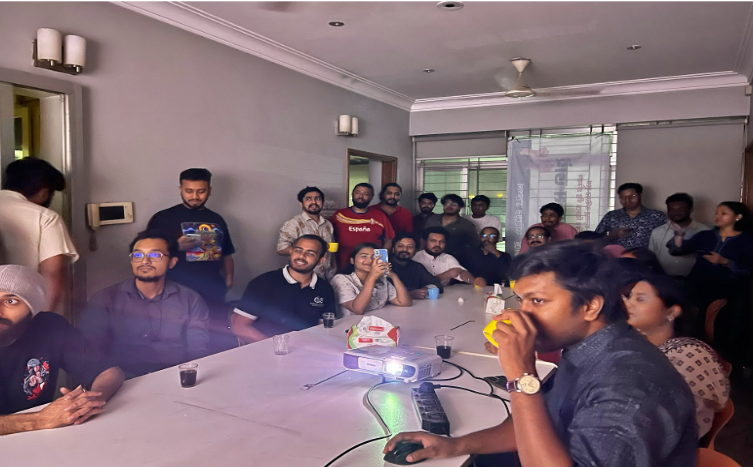
A Close-Knit Evening of Film and Reflection
The event unfolded in a warm and inviting space, with around 30 attendees, including cast members, friends, and crew. The presence of Bakar Bakul, one of the most prominent theatre activists, added a sense of honor to the gathering.
Everyone arrived before iftar, the air buzzing with anticipation. As the evening prayers echoed in the distance, plates were filled, conversations sparked, and laughter intertwined with the aroma of steaming tea. This was more than just a film screening—it was a reunion of like-minded individuals bound by a love for storytelling.
After iftar, as the lights dimmed, the screen lit up with Mukhobondho. Some watched it with high expectations, analyzing every frame, while others simply let themselves be carried by the experience. No matter their perspective, one thing was certain—the film left an impact.
The Spirit Behind the Production
One of the most significant aspects of Mukhobondho was how it came to life—on a shoestring budget, powered by trust, collaboration, and unwavering dedication. With over 50 cast members involved, the film was not just a production but a collective effort built on companionship, mutual understanding, and a shared vision.

Image 1: Director Lutful Alam Nitul Image 2: Shakkho Shahid (Protagonist)
After the screening, Shakkho Shahid, the film’s lead actor, shared his experience, reflecting on the journey and the deeper meaning of the film.
The director, Lutful Alam Nitul, concluded the event with a simple yet powerful statement:
“Amar akhon mukh bondho thaka uchit.” (“I should remain silent now.”)
A fitting end to an evening that celebrated both cinema and silence—the silence that speaks louder than words, the silence that Mukhobondho dares to break.
Looking Ahead
This screening was just the beginning. Mukhobondho is not merely a film—it’s a mirror to society, a reminder of the things we witness every day but often choose to ignore. As the film continues its journey, one thing remains certain: its story, its essence, and its message will stay with the audience long after the screen fades to black.